
Languages
KS3
KS4
KS5 (Sixth Form)
Summary
We teach French, German and Spanish at Gordon’s. Year 7 students are allocated a language during the application process, which they will study from September of the year they start until the end of KS4.
French
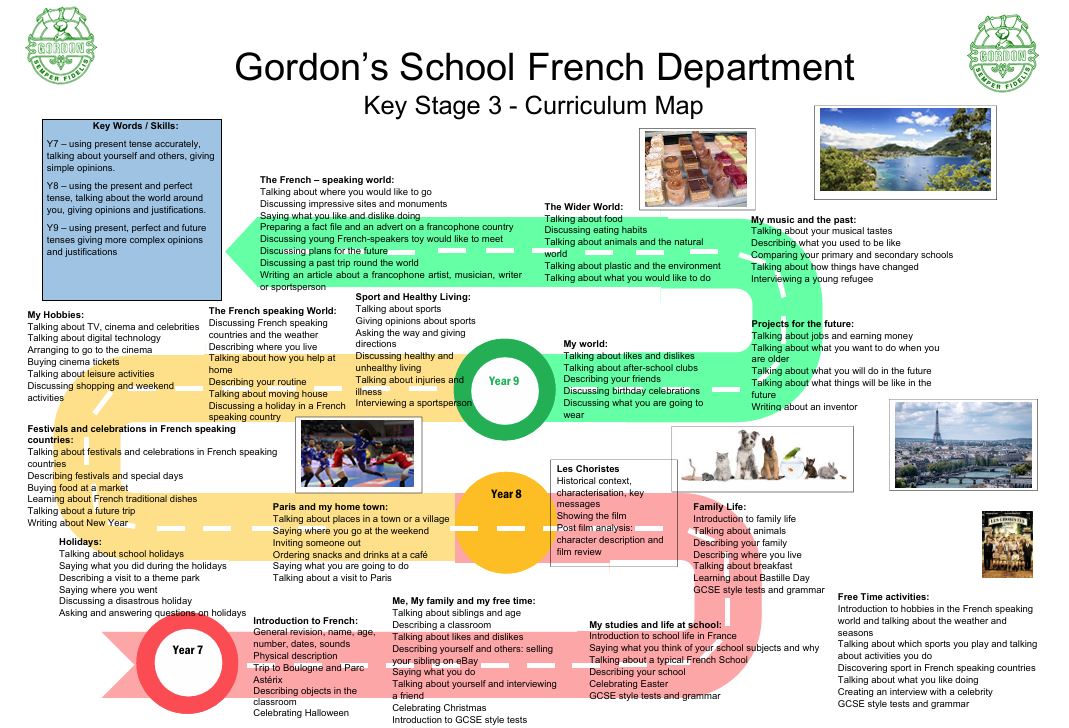
Students who are allocated to study French learn a spectrum of topics in Key Stage 3, including self and family, home and environment, free time and technology. They also learn a range of tenses and grammar points and the skills necessary for language learning; reading, listening, speaking, writing and translation.
Students have the opportunity to take part in the Year 8 & Year 9 trip to Parc Astérix, Compiègne and the WW1 town of Arras and the Year 11 & Year 13 trip to Paris.
German
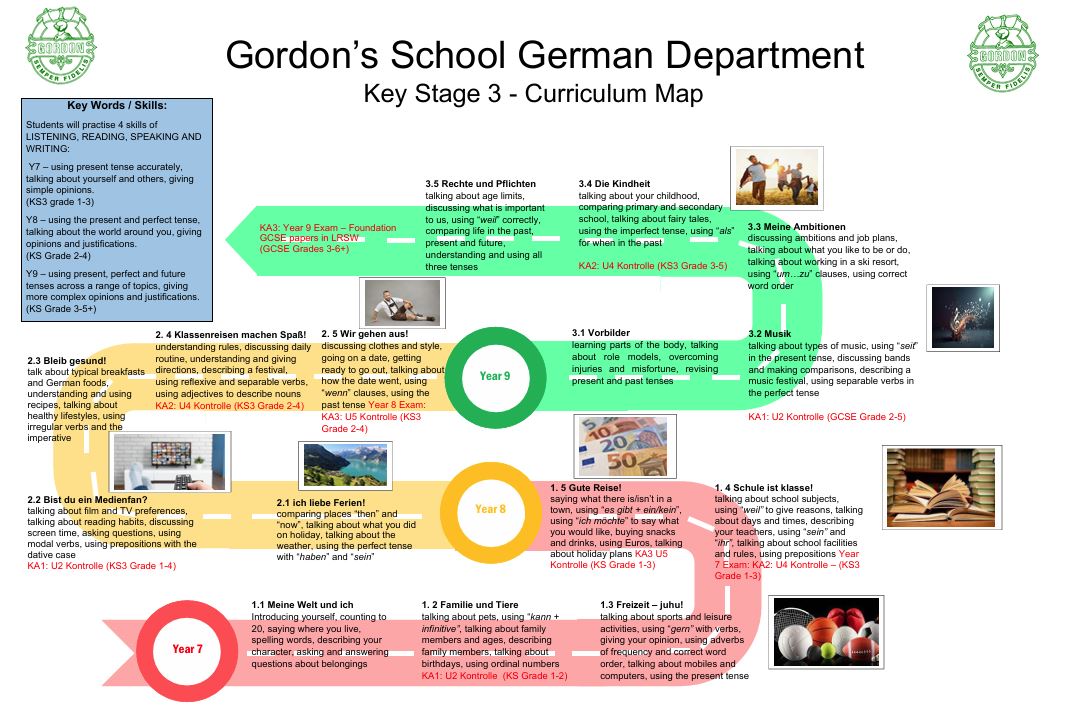
At Key Stage 3, we use the Stimmt! Course to provide a framework for our learning whilst employing many Extensive Processing Instruction techniques to help improve students’ listening and speaking skills. Students will learn to talk about themselves and their families and local area and be able to use 3 tenses and talk about a wide variety of topics by the end of KS3.
Spanish
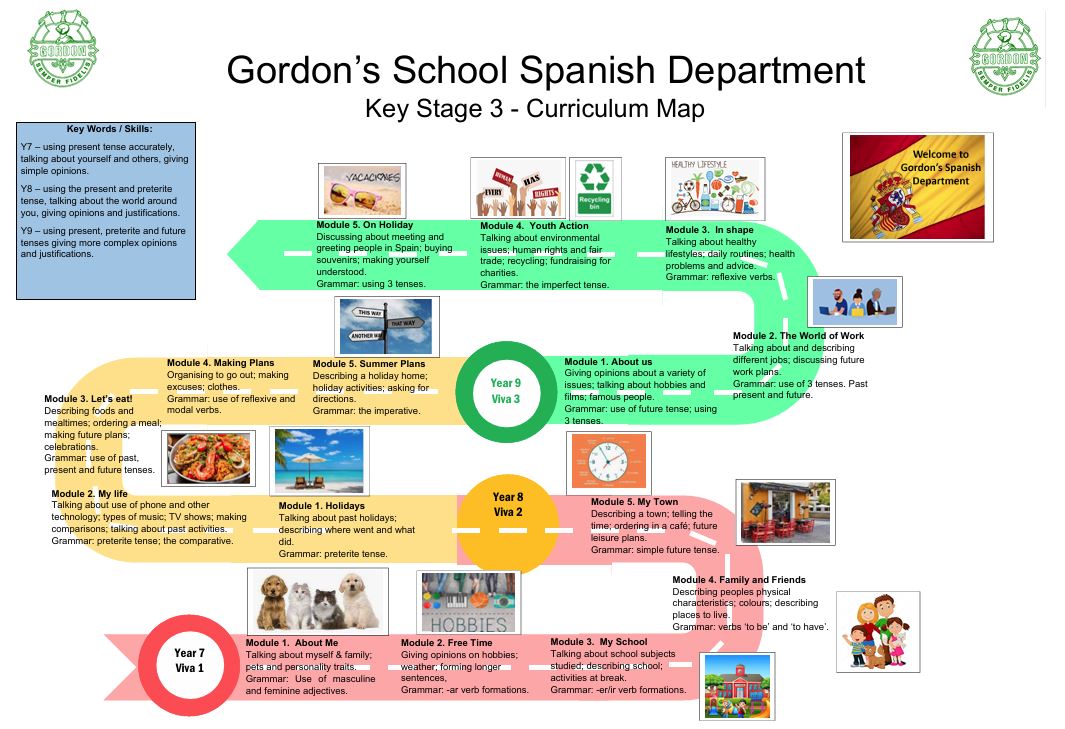
Using the Viva course books, students focus on the foundations of the language throughout such as basic grammar points and the skills necessary for language learning; reading, listening, speaking, writing and translation. Topic specific vocabulary enabling students to talk about a variety of topics and contexts such as on topics such as self and family, home and environment and free time and technology, using the past, present and future tenses.
Head of MFL: Mr Depoix sdepoix@gordons.school
Summary
French
GCSE French provides a solid foundation for progression to other language studies, including A Level French. Students gain a strong grounding in a range of tenses and higher level structures as well as a broad spread of vocabulary.
Students have the opportunity to take part in the Year 11 trip to Paris where they not only visit the city but also take part in a variety of language activities.
Clinics are provided in the Spring Term and in the run up to exams to support, stretch and challenge students at GCSE level. These are run fortnightly during lunch times and pre-exam clinics run in the evenings or at weekends.
We follow the Edexcel specification for the new (2024) GCSE in French, German and Spanish.
German
GCSE German provides a solid foundation for progression to other language studies, including A Level German. Students gain a strong grounding in a range of tenses and higher level structures as well as a broad spread of vocabulary. We encourage all of our students to take part in the German Exchange with our partner school in Baden-Wurttemberg, which involves hosting a German partner at the end of Year 10 and then staying with them for a week at the end of the Autumn Term in December.
Clinics are provided in the Spring Term and in the run up to exams to support, stretch and challenge students at GCSE level. These are run fortnightly during lunch times and pre-exam clinics run in the evenings or at weekends.
We follow the Edexcel specification for the new (2024) GCSE in French, German and Spanish.
Spanish
GCSE Spanish provides a solid foundation for progression to other language studies, including A Level Spanish. Students gain a strong grounding in a range of tenses and higher level structures as well as a broad spread of vocabulary. Students are also offered a residential home-stay trip to Málaga with a cultural and educational focus, including meeting Spanish students and having lessons in a private school, visiting important cultural attractions and of course, lots of practice in listening and speaking Spanish.
Clinics are provided in the Spring Term and in the run up to exams to support, stretch and challenge students at GCSE level. These are run fortnightly during lunchtimes and pre-exam clinics run in the evenings or at weekends.
We follow the Edexcel specification for the new (2024) GCSE in French, German and Spanish.
Course details
French
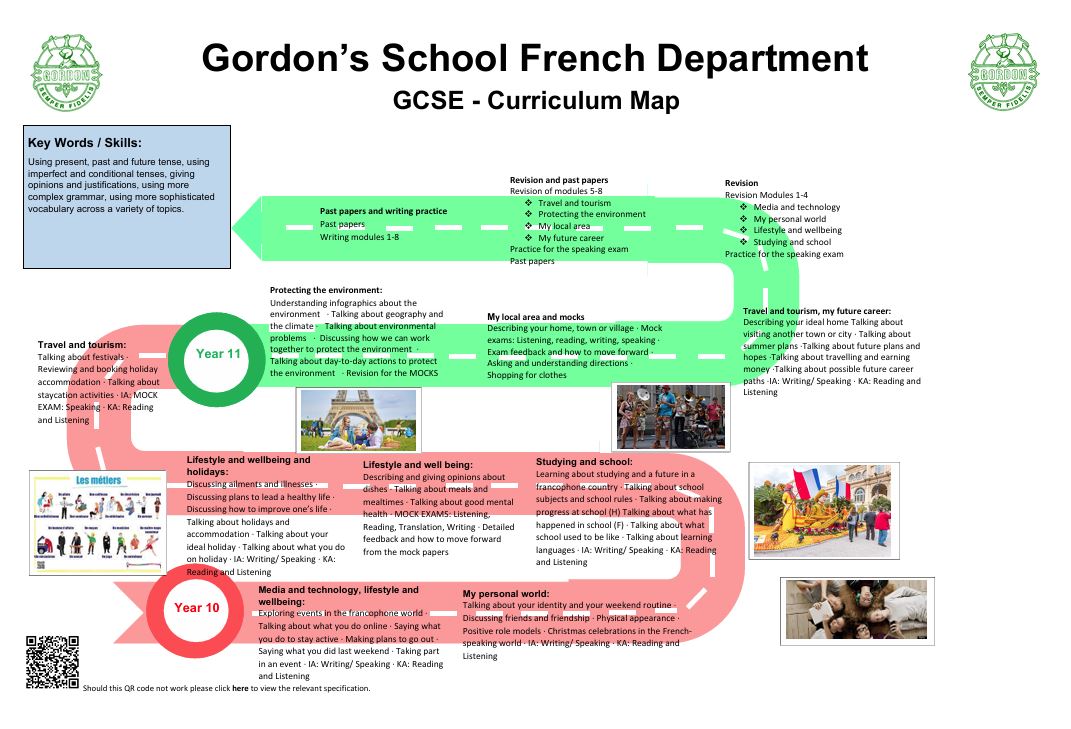
Students will study six thematic contexts which are an extension of Key Stage 3 topics::
- My personal world
- Lifestyle and well-being
- My Neighbourhood
- Media and technology
- Studying and my future
- Travel and tourism
TYPICAL ACTIVITIES
- Reading and listening activities to improve vocabulary, comprehension and dictation skills.
- Speaking with teacher and peers including practising reading aloud, role plays and describing pictures.
- Producing different types of written pieces in the target language in a variety of tenses.
- Translation activities from and to the target language.
German
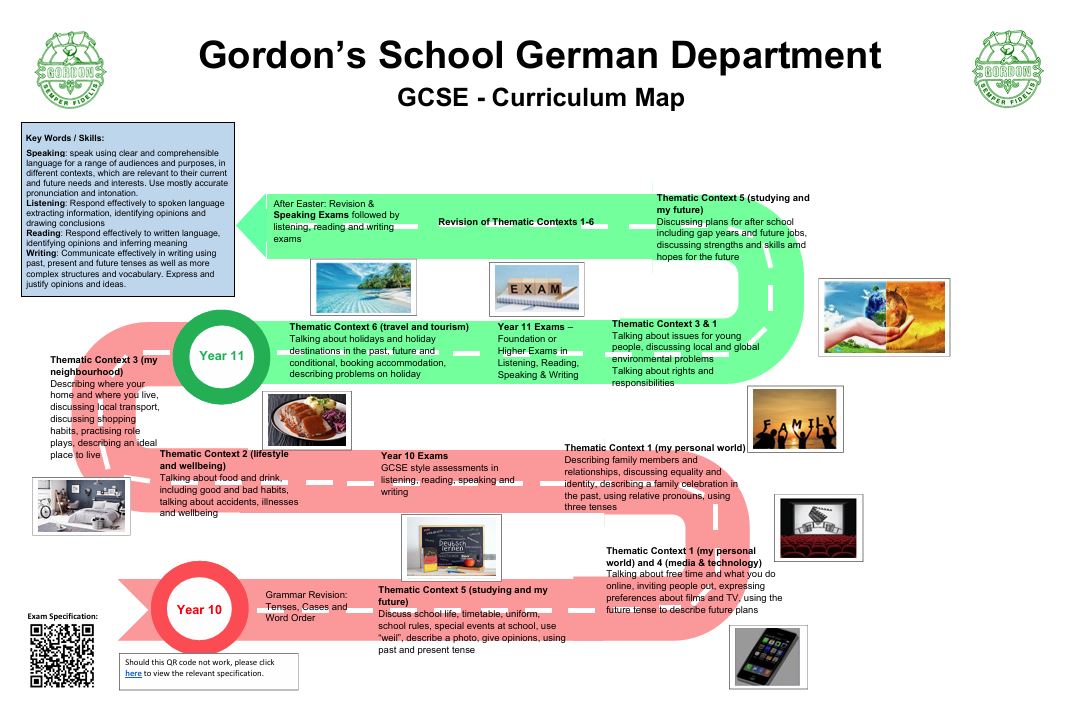
Students will study six thematic contexts which are an extension of Key Stage 3 topics::
- My personal world
- Lifestyle and well-being
- My Neighbourhood
- Media and technology
- Studying and my future
- Travel and tourism
TYPICAL ACTIVITIES
- Reading and listening activities to improve vocabulary, comprehension and dictation skills.
- Speaking with teacher and peers including practising reading aloud, role plays and describing pictures.
- Producing different types of written pieces in the target language in a variety of tenses.
- Translation activities from and to the target language.
Spanish
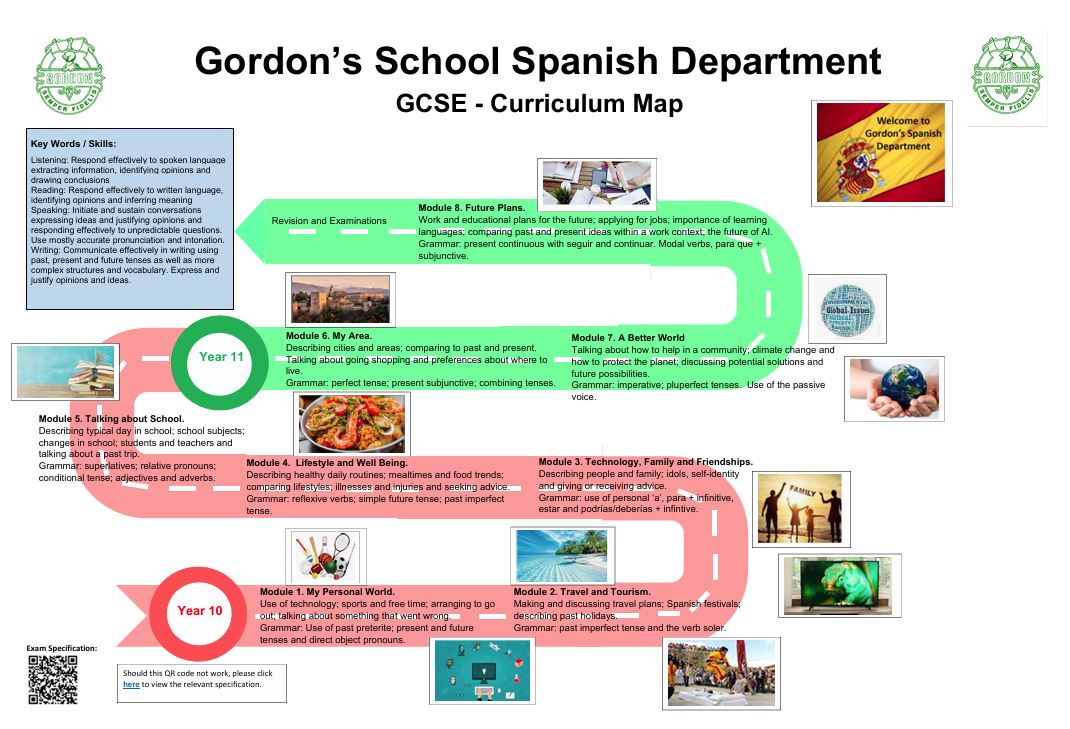
Students will study six thematic contexts which are an extension of Key Stage 3 topics::
- My personal world
- Lifestyle and well-being
- My Neighbourhood
- Media and technology
- Studying and my future
- Travel and tourism
TYPICAL ACTIVITIES
- Reading and listening activities to improve vocabulary, comprehension and dictation skills.
- Speaking with teacher and peers including practising reading aloud, role plays and describing pictures.
- Producing different types of written pieces in the target language in a variety of tenses.
- Translation activities from and to the target language.
Summary
French
Studying French at A Level is an enriching and rewarding experience that goes far beyond learning a language. Students develop a deeper understanding of French society, the Francophone world and key aspects of French history, while gaining valuable insights into different cultural and global issues. Alongside advanced language skills, the course encourages students to become confident communicators, critical thinkers and independent learners.
Wherever possible, Year 13 students also have the opportunity to take part in a trip to Paris at the start of the academic year, providing an authentic cultural experience and bringing their studies to life.
Our French department has an outstanding track record of success, with consistently excellent A Level results. We welcome students from both within our school and the wider community, many of whom choose our course because of its excellent reputation, supportive teaching and strong outcomes.
Clinics are provided in the Spring Term and in the run up to exams to support, stretch and challenge students at A-level. These are run fortnightly during lunch times and pre-exam clinics run in the evenings or at weekends.
German
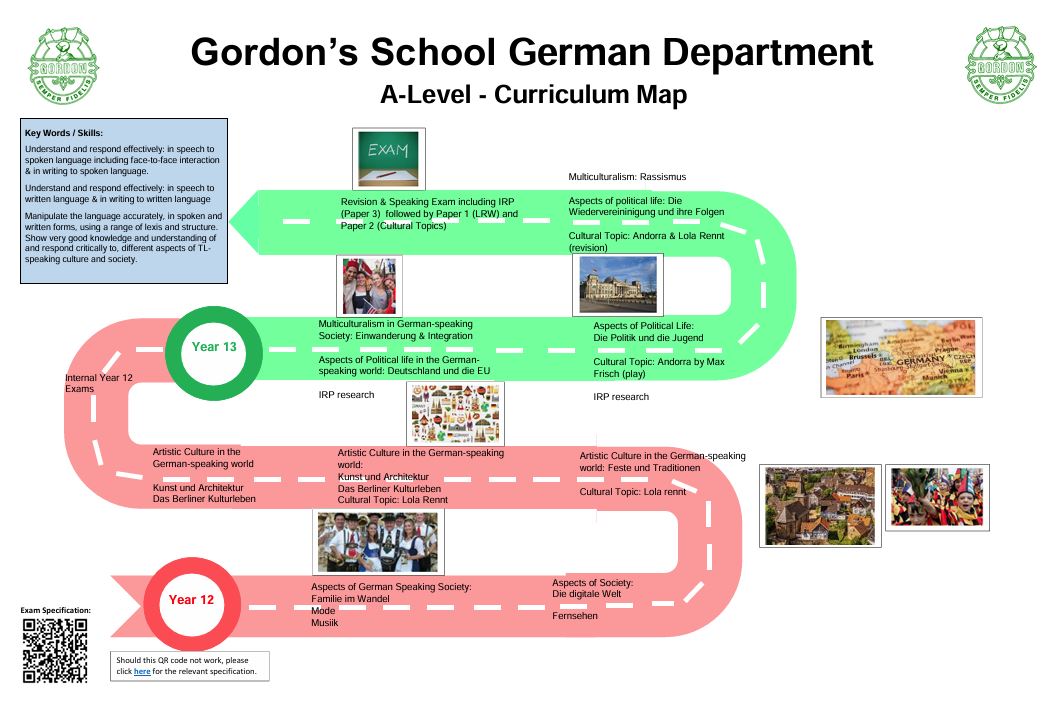
A-Level German (AQA Syllabus) is designed to allow students to use their linguistic abilities to discuss, debate and express their own opinions on a wide variety of topics such as the changing role of family in society, festivals, art and architecture, German history, politics and current affairs such as immigration and integration. Students will also study in depth the film Lola Rennt by Tom Tykwer and the play, Andorra by Max Frisch. We offer the opportunity to take part in the German exchange as well facilitating work experience in Germany if so desired. We are seeing increasing numbers of external students joining as for A-Level German as our reputation as a local centre of excellence grows. We have had two successful Oxbridge students in the past three years and pride ourselves on our excellent track record of achievement at A-level.
Clinics are provided in the Spring Term and in the run up to exams to support, stretch and challenge students at A-level. These are run fortnightly during lunch times and pre-exam clinics run in the evenings or at weekends.
Spanish
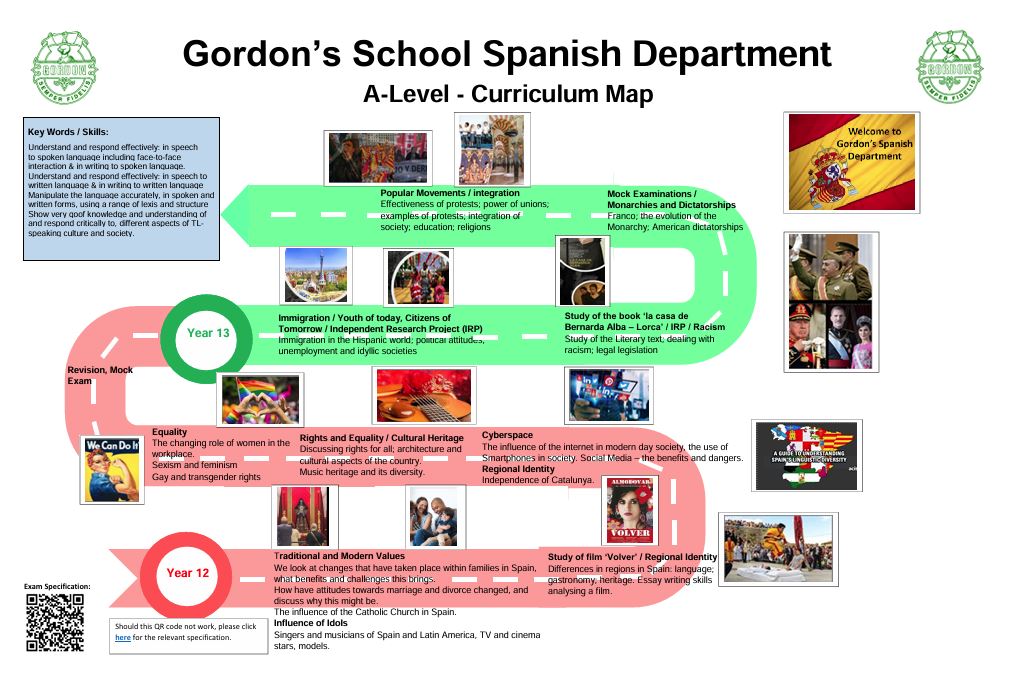
A-Level Spanish (AQA Syllabus) is designed to allow students to use their linguistic abilities to discuss, debate and express their own opinions on a wide variety of topics such as the changing role of family in society, youth movements, the Spanish civil war and dictatorships. Students will also study in depth the film Volver and the play, la casa de Bernarda Alba. Spanish at Key Stage 5 is a challenging yet greatly rewarding subject, especially for those students who wish to further study languages after school or in supporting university and job applications where language students are valued highly. Students are also are offered a five-day residential home-stay trip to Málaga with a cultural and educational focus, including meeting Spanish students and having lessons in a private school, visiting important cultural attractions and of course, lots of practice in listening and speaking Spanish.
Clinics are provided in the Spring Term and in the run up to exams to support, stretch and challenge students at A-level. These are run fortnightly during lunch times and pre-exam clinics run in the evenings or at weekends.
Course details
French
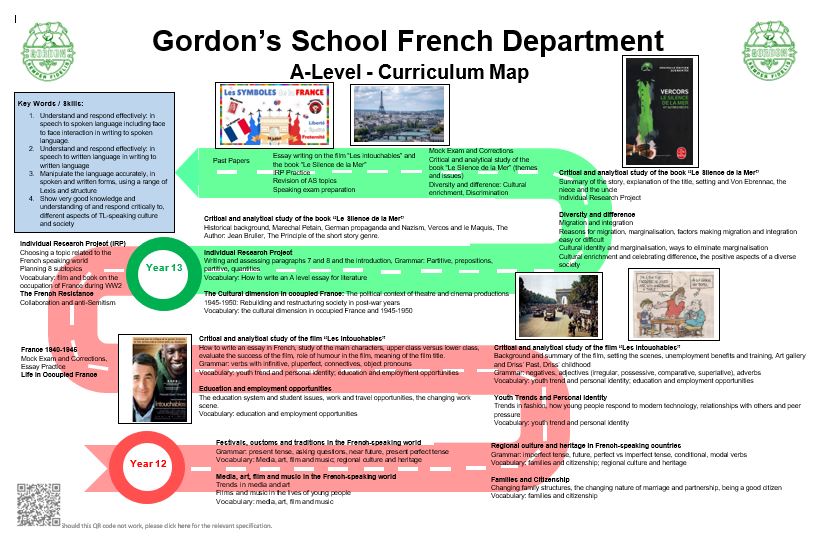
Unit 1: Social Issues and Trends: Students will study three topics within this unit; families and citizenship, youth trends and personal identity and education and employment opportunities
Unit 2: Understanding the French speaking world: For this unit students will study regional culture and heritage in France, media, art, film and music in the French speaking world
Prescribed works: Vercors: Le silence de la Mer (Year 13) and Éric Toledano, Olivier Nakache: Intouchables (Year 12)
Year 13 Only
Unit 3: Diversity and difference: In this unit students will study migration and integration, cultural identity and marginalization, cultural enrichment and difference and discrimination and diversity
Unit 4: France 1940-1950: Students will study June 1940-May 1945, The cultural dimension in occupied France and 1945-1950
German
Paper 1: Listening, reading and writing: Aspects of German-speaking society
Artistic culture in the German-speaking world
Grammar: Written exam: 1 hour 45 minutes (AS) 2 hours 30 minutes (A Level) In Year 13 this paper includes Multiculturalism and Aspects of Political Life as topics
Paper 2: Writing: One text or one film from the lists in the specification (Lola Rennt: Tom Tykwer)
Grammar: Written exam: 1 hour 30 minutes (AS) 2 hours (A Level)
In Year 13 you will study the set text (Andorra: Max Frisch) as well
Paper 3: Speaking: AS: One sub-theme from Aspects of German-speaking society and one sub-theme from
Artistic culture in the German-speaking world
A Level: Individual research project
One of four sub-themes i.e. Aspects of German-speaking society or Artistic culture in the German-speaking world or Multiculturalism in German-speaking society or Aspects of political life in German-speaking society
Speaking exam: 12-14 minutes (AS) 21-23 minutes (A Level)
Spanish
Unit 1: Social issues and trends including aspects of Hispanic society such as values, Cyberspace, Equal rights and a focus on multiculturalism in Hispanic society which also comprises Immigration, Racism, Integration. The third aspect of this unit is Grammar.
Unit 2: Political and artistic culture which includes artistic culture in the Hispanic world, modern day idols, regional identity and cultural heritage. The second part of this unit is Aspects of political life in the Hispanic World with the subtopics of Today’s youth tomorrows’ citizens, Monarchies and dictatorships, Popular movements.
There is also a section which is examined and which has optional content where students will study one literary text and one film. The film – Volver Pedro Almódovar and Text - la casa de Bernarda Alba.
Entry Criteria
French: GCSE grade 6 in French
German: GCSE grade 6 in German
Spanish: GCSE grade 6 in Spanish
/_site/data/files/curriculum/subject-guides/39BB6937F1105D8C10222E93FBF51EF7.pdf