FOOD PREPARATION AND NUTRITION
introduction
AQA Food Preparation and Nutrition: Food Safety and Hygiene underpins all lessons that we have in the food room. Students gain a good understanding of nutrients and nutritional needs of different groups and the reasons why we choose the foods we consume. They will understand the function of ingredients in specific recipes and why reactions occur. Students will gain an understanding of food provenance, regional and international cuisine, and the impact that the world food supply has on the environment and sustainability.
Students are only able to choose one area of Design and Technology to study at GCSE.
Food Preparation and Nutrition
Food Preparation and Nutrition will equip students with the knowledge, understanding, skills and encouragement they need to cook. It will give them the ability to apply the principles of food science, nutrition and healthy eating.
Students will be able to make informed decisions about a wide range of further learning opportunities and career pathways, and develop vital life skills so that they can feed themselves and others affordably and nutritiously.
Head of Department: Miss C Neale - cneale@gordons.school
KS3
KS4
Key Stage 3
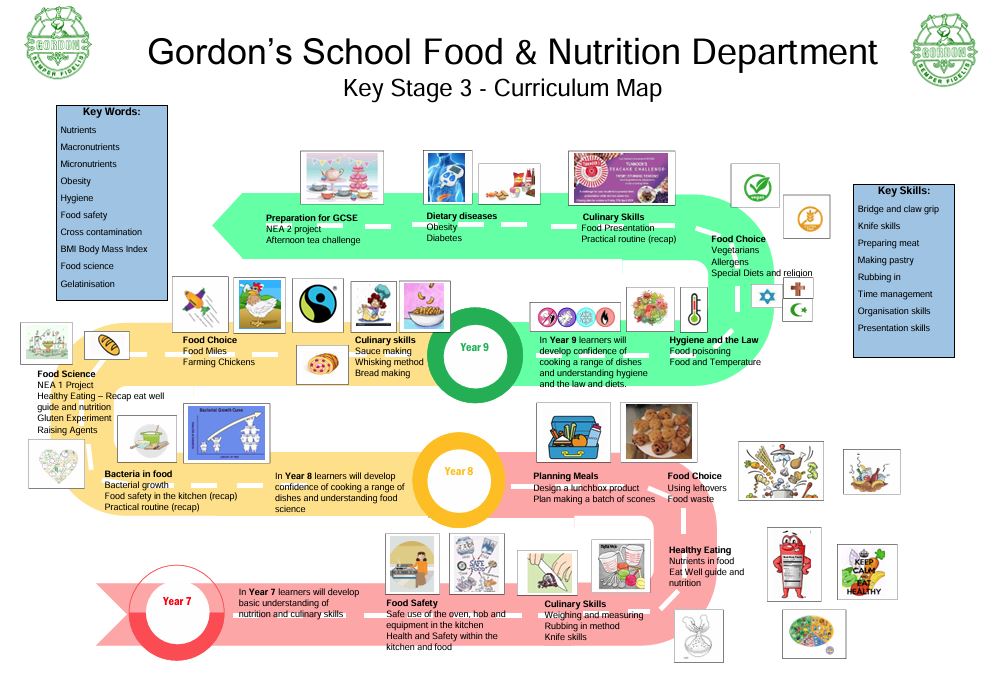
At KS 3 students undertake a rotation through 3 DT specialisms, Food and nutrition being one. They spend 11 weeks in each rotation. Below are some of the content covered in each year.
Year 7 - Course Details:
Food & Nutrition
- Students will be taught basic cooking skills and learn how to use the kitchen equipment.
- Introduction to food safety and hygiene in the kitchen. Also, a lesson on nutrition, to include the Eatwell Guide and macro and micro nutrients.
- Students will cook seven dishes over the course of the rotation to consolidate their learning from theory lessons. These include a vegetable stir-fry and a scone-based pizza.
Year 8 - Course Details:
Food & Nutrition
- More in-depth look at food safety and hygiene to build on Year 7 knowledge to ensure food is safe to eat.
- An introduction to food science. Students will gain an understanding of how ingredients work. Why does flour thicken the sauce? How does yeast work?
- Lessons on food province, where food comes from. These lessons include, Fairtrade, food miles and British produce.
- Seven recipes will be cooked based on the theory learnt in the last lesson. This helps the student to associate their learning. Recipes include macaroni cheese, chicken goujons and wedges.
Year 9 - Course Details:
Food & Nutrition
- Recap on food safety and hygiene, to include the regulations and law.
- Lessons designed to look at food choices. These include food allergies and intolerances, dietary diseases and religious diets. Practical lessons follow each theory and build on the knowledge learnt as well as improve their practical cooking skills. Recipes include chicken kebabs and fish tacos.
- An introduction to GCSE to include a small project on a country's cuisine. Students will research a country and cook two dishes from that country.
There are plenty of co–curricular cooking activities, including inter house baking competitions and Arete competitions cooking against other schools.
Key Stage 4
AQA Food Preparation and Nutrition:
Food Safety and Hygiene underpins all lessons that we have in the food room. Students gain a good understanding of nutrients and nutritional needs of different groups and the reasons why we choose the foods we consume. They will understand the function of ingredients in specific recipes and why reactions occur. Students will gain an understanding of food provenance, regional and international cuisine, and the impact that the world food supply has on the environment and sustainability.
Students are only able to choose one area of Design and Technology to study at GCSE.
Course Details:
Food Preparation and Nutrition will equip pupils with the knowledge, understanding, skills and encouragement they need to cook. It will give them the ability to apply the principles of food science, nutrition and healthy eating.
Students will be able to make informed decisions about a wide range of further learning opportunities and career pathways, and develop vital life skills so that they can feed themselves and others affordably and nutritiously.
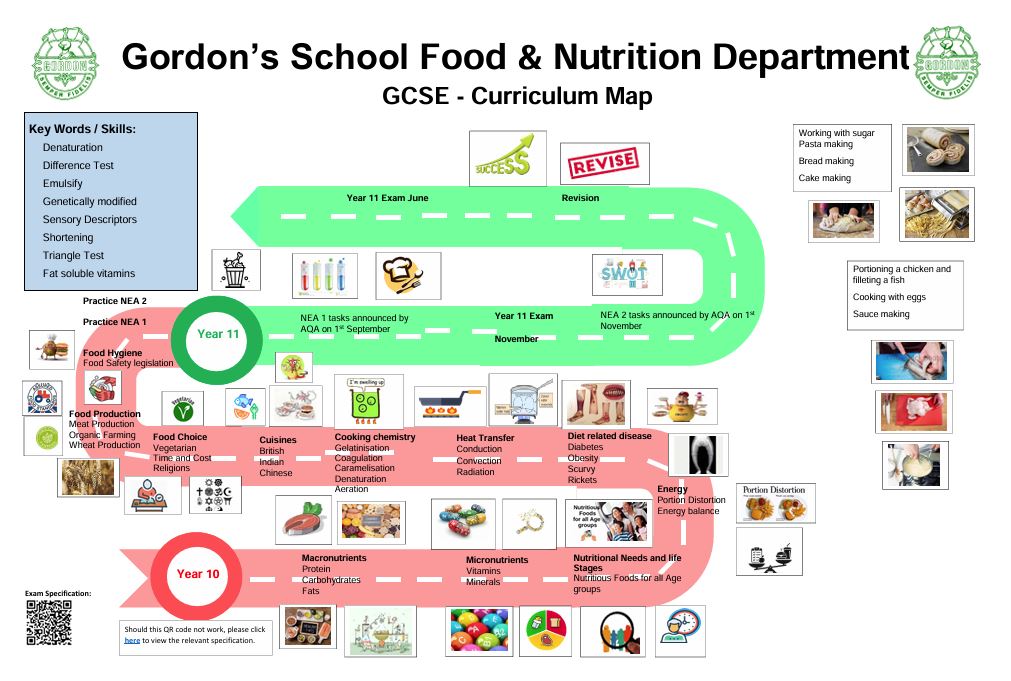
The GCSE focuses on practical cooking skills to ensure students develop a thorough understanding of nutrition, food provenance and the working characteristics of food materials. At its heart, this qualification focuses on nurturing students’ practical cookery skills to give them a strong understanding of nutrition.
TYPICAL ACTIVITIES
Food preparation skills are integrated into five core topics:
- Food, nutrition and health
- Food science
- Food safety
- Food choice
- Food provenance
Students will spend an almost equal amount of time on written tasks and practical application. All practical tasks are completed to develop a student's understanding of Food and Nutrition.